We’ve all been there: one minute you’re breaking open a bag of popcorn, and the next… poof! it’s mysteriously vanished, leaving behind nothing but buttery fingertips and crumbs. If your mouth has ever chewed its way through a meal while your brain took a detour through tomorrow’s to-do list, welcome to the world of autopilot eating. But what if your food could help you snap out of it? Meet your meal’s built-in mindfulness coach: texture and taste.
But, before we talk solutions, let’s talk science. Autopilot eating often stems from habit loops, those routines that are stored in the basal ganglia, a part of the brain that not only is associated with habit formation but also plays a role in influencing how we respond to rewards. That’s why your hand keeps reaching into the bowl long after your taste buds have stopped caring.
Mindfulness, in contrast, recruits the prefrontal cortex which manages our conscious thinking and behavior control. And guess what? Taste and texture can be powerful triggers to shift gears from mindless to mindful.
Texture: your secret weapon. When you bite into a crisp apple or a roasted chickpea with just the right amount of snap, your brain lights up. Texture adds sensory contrast, a subtle invitation to slow down and notice what’s happening in your mouth.
According to research in the Journal of Nutrition, food texture significantly influences the rate at which we eat. In addition, crunchy and fibrous textures slow chewing time and encourage more thorough mastication, a natural pause button for your meal.
Try this:
- Add slivers of radish or cabbage to your sandwich for extra crunch.
- Toss roasted nuts or seeds into your salad instead of croutons.
- Swap soft bread for a hearty, whole grain version with some chew.
These choices add time to each bite, not only giving your satiety signals a chance to catch up, but turning your meal into a sensory experience, not a speed-eating competition.
Tickle your taste buds and tune into your meal. Taste isn’t just about pleasure, it’s a powerful presence cue. When flavors are complex, surprising, or even subtly spicy, they invite focus. Studies show that enhanced sensory cues can help reduce food intake and increase satisfaction.
Ever notice how a bold curry or zesty chimichurri makes you pause just a second longer to savor? That’s flavor doing its job.
Try this:
- Use a splash of citrus or a shake of smoked paprika to liven up veggies.
- Experiment with global spice blends: za’atar, garam masala, or Chinese five spice.
- Cook with contrasting elements: sweet + sour, spicy + creamy, bitter + umami.
Not only do these flavor pairings keep your mouth interested, they keep your brain engaged in the present instead of on autopilot.
Mindful eating is not about perfection. This isn’t a crusade against convenience or a guilt trip about distracted dining. Instead, consider mindful eating as a skill you can build on. Mindful eating can be defined as bringing your full attention to the eating experience — the color, texture, aroma, and yes, even sound of your food. Research has found that practicing mindful eating can lead to higher diet quality, improved blood sugar regulation, and even weight management over time.
But perhaps its greatest gift? Satisfaction. When you eat with intention, really noticing the crackle of roasted chickpeas or the slow melt of dark chocolate, your meal feels more complete.
Create a sensory eating ritual. Want to override autopilot at your next meal? Try this simple, sensory ritual:
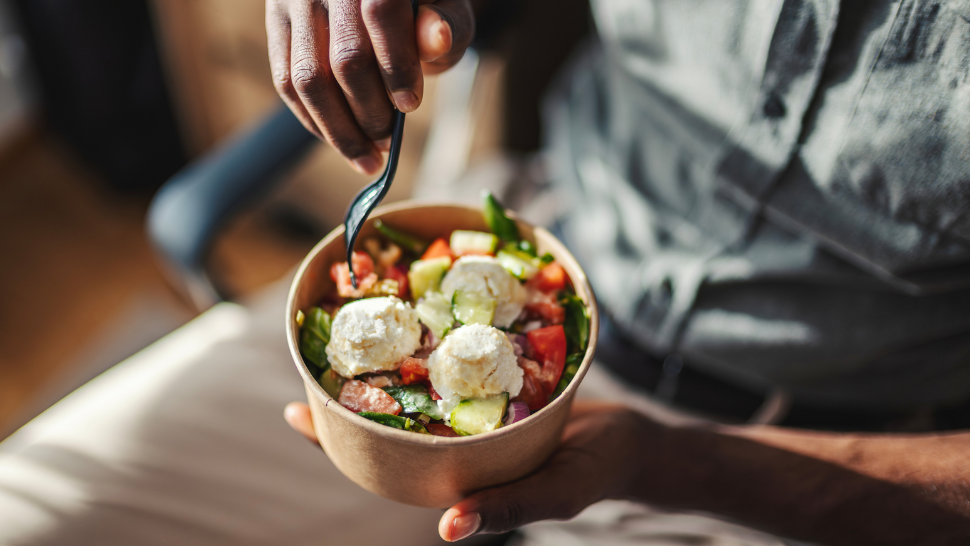
- Pause before the first bite. Look at your food. Appreciate the colors and plating (even if it’s a paper bowl, it still counts).
- Inhale deeply. What do you smell? Can you detect herbs? Toasted notes? Tang?
- Take one slow bite. Notice the temperature, texture, and how it changes as you chew.
- Swallow, then pause again. Wait 5 seconds before your next bite. Your taste buds, and digestive system, will thank you.
If you only do this for the first two or three bites, that’s still a win. Mindful eating doesn’t require a meditation cushion or a silent retreat (but it can), just a little curiosity and some good crunch.
You don’t need to upend your whole routine to eat more mindfully. You just need to recruit the allies already on your plate: texture to slow you down, taste to draw you in, and a little presence to enjoy the journey.
The next time you eat, let your food be more than fuel. Let it be your nudge back to the present — one crunchy, flavorful, delightfully unhurried bite at a time.